

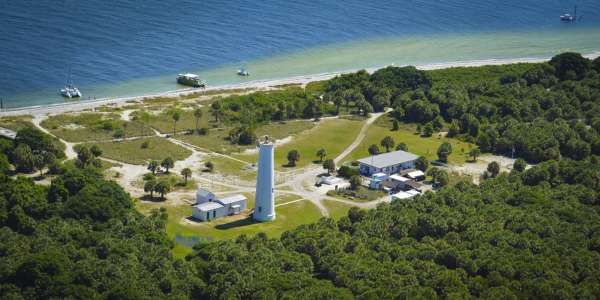
Egmont Key
 Photo: BonnieJean Exum
|
Active: Yes Characteristics: Fixed white light (originally; flashing white every fifteen seconds (currently). Height: 76 feet, 99 steps DayMark: White conical tower (no lantern). History: Constructed 1857-1858. First Lighted May 1858. On National Register Listing. Lens: Original: Third-order fixed Fresnel lens; Henry-LePaute (1858). Present: DCB-24 electric rotating beacon. Construction: Architect: Augustus Angstrom. Masonry conical tower constructed of Brick, concrete and iron. Other Buildings: Radio and generator building, oil storage house, modern staff quarters. Coordinates: 27 36 03 N 82 45 38 W Operated by: United States Coast Guard and Florida Park Service Visit Status: Accessible by boat Facilities: None, no handicap access Hours Open: Varied Visitor Info: The grounds are open to the public daily, base of tower open occasionally. Description: The small island of Egmont Key in Tampa Bay was named by the British after the Earl of Egmont, who at the time was Lord of the Admiralty. Florida became part of the U.S. in 1821, and with the increase in commerce in the Gulf of Mexico a lighthouse was built on Egmont Key in 1847-1848. The light was first lighted in 1848, but after only 10 years it was so battered by storms that in 1858 it was dismantled. A second tower was built in 1857-1858 and lighted in May 1858. This tower was built with brick walls more than three feet thick, and stood 87 feet tall including the lamp house. Though this tower has survived a century and a half of hurricanes and storms, it's lamp house was eventually removed and was replaced with a modern beacon light, leaving the tower with a rather unusual appearance. Even so, the Egmont Key Lighthouse remains in service to this day. The lighthouse can be reached only by boat, with ferry service available from the Fort De Soto State Park. Contact: Egmont Key Alliance, Inc Egmont Key State Park/Park Manager Richard Sanchez, President of the Egmont Key Alliance 4905 34th St. S. # 5000 St. Petersburg, FL 33711 Email: egmontkey@juno.com Website: www.EgmontKey.info/ Back to Lighthouse List> |
